
On translating philosophy
What it takes to move an argument between languages when the target language has no words for half of it.
The complaint is old and it is usually wrong. Latin is called a poor language for philosophy, and the evidence offered is that it lacks the words. But a language does not have words for something nobody has yet written about in it, and acquiring them is the ordinary cost of going first.
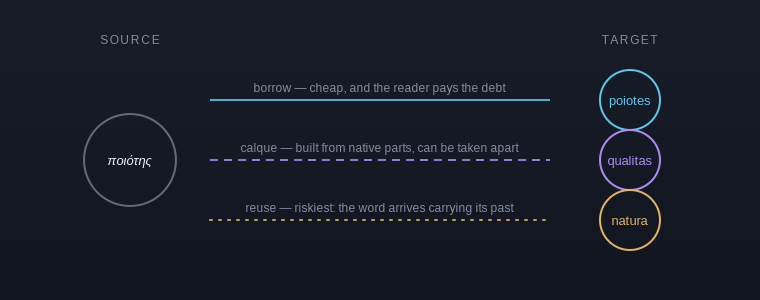
Three ways to do it
Borrow. Keep the Greek and let it naturalise. Cheap, and it works, but each loan is a small debt the reader pays.
Calque. Build the word out of native parts in the same shape as the
original. ποιότης becomes qualitas. The reader can take it apart.
Reach for something that exists. The riskiest of the three, because a word already in use arrives carrying everything it has meant before.
What actually goes wrong
Not vocabulary. Vocabulary is solvable and mostly solved after one good book.
What goes wrong is register — a distinction that was technical in the source becoming ordinary in the target, so that a reader misses that a term is being used precisely. You cannot fix that with a glossary. You fix it by writing sentences that make the distinction do visible work.